When I worked in libraries, one of my favourite things to do was nursery rhyme sessions with young children. I always loved the noise and chaos of them. There is something wonderfully ridiculous about a room full of adults enthusiastically singing about curds and whey, runaway dishes and old men snoring.
At the same time though, I gradually became aware that the children who seemed most confident with language were often the ones who had been surrounded by stories, songs, conversation and rhyme from an early age. They arrived already enjoying words.
My daughter, who teaches in primary school, has noticed similar patterns in the classroom. The children who are familiar with stories, rhymes and songs often seem much more comfortable playing with language, joining in discussions and developing early reading confidence.
That is not just anecdotal. There is now a considerable body of research linking nursery rhymes with early language development and later reading success. The International Literacy Association highlights the importance of phonological awareness in helping children recognise sound patterns within language, something strongly supported through rhyme, repetition and song.
What is striking now, however, is how many children no longer know some of the rhymes that used to pass naturally from one generation to the next.
Humpty Dumpty
Little Miss Muffet
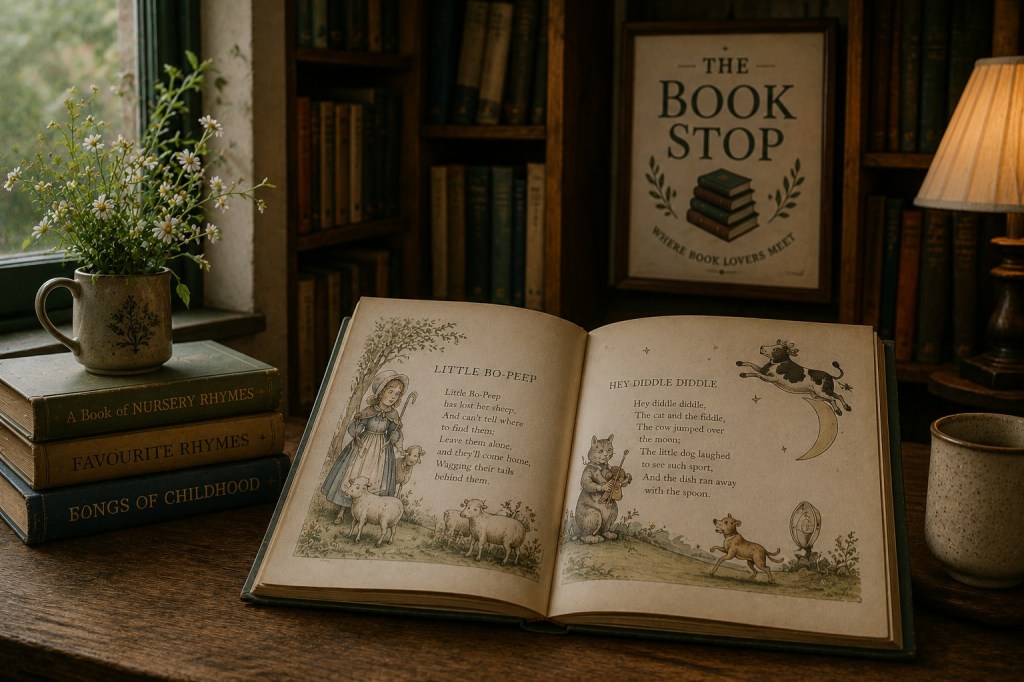
Hey Diddle Diddle
Jack and Jill
Sing a Song of Sixpence
Most adults can still instantly recite lines from them decades later, which probably tells us something important in itself.
Of course, nursery rhymes are not really about producing tiny academics. They are about playfulness, connection, memory and enjoyment. They create moments between adults and children that often become strangely memorable. Many of us probably associate rhymes with sitting on somebody’s knee, bedtime routines, grandparents, laughter or classrooms from long ago.
At The Book Stop we would love to celebrate nursery rhymes a little more. If anybody would like to help run a rhyme session, share favourite traditional rhymes, contribute ideas or get involved in community events linked to stories, songs and early reading, we would genuinely love to hear from you.
And if nothing else, perhaps it is simply nice to keep alive the fact that cows still jump over moons and mice still run up clocks.
Reference: International Literacy Association (2020) Phonological Awareness in Early Childhood Literacy Development. Newark, DE: International Literacy Association.
 The Book Stop
Leave a comment